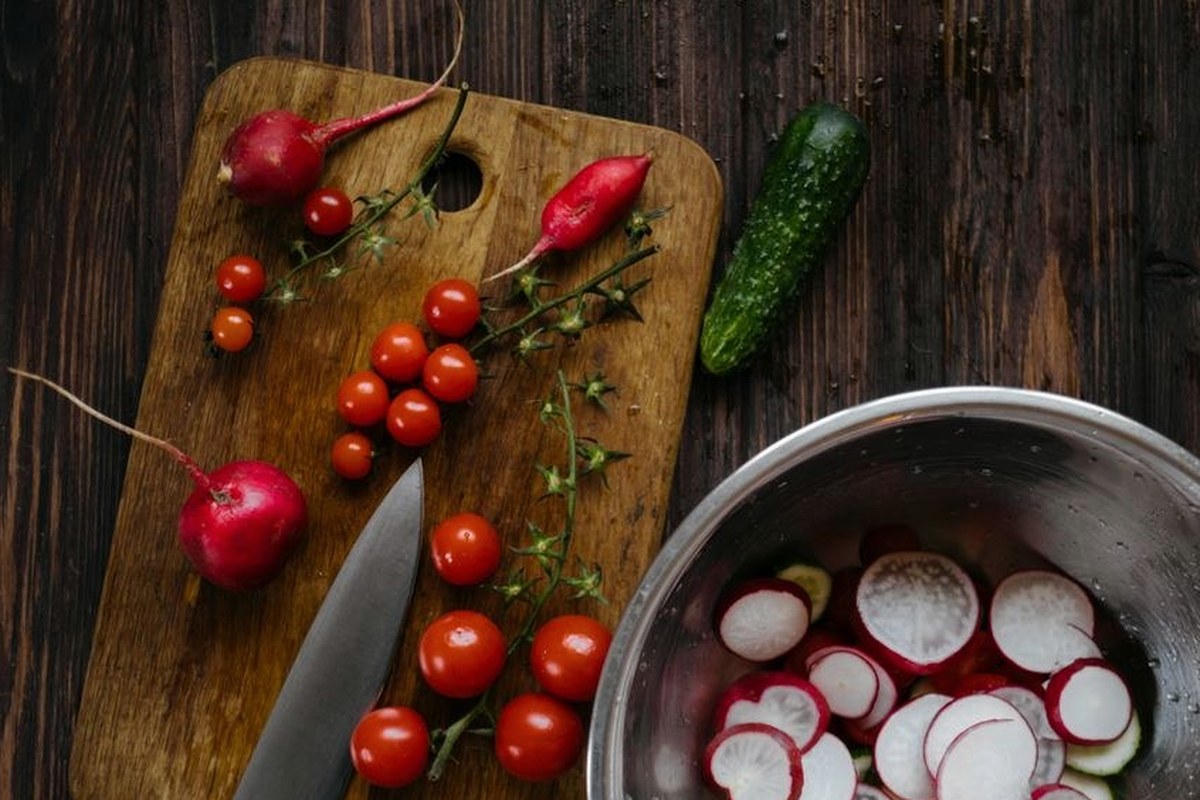
The nearly empty fridge is often more useful than it looks. A few vegetables, half a lemon, a jar of something salty and one dependable pantry staple can become dinner if you stop trying to recreate a recipe that was designed for a fuller kitchen.
Choose the ingredient that needs using first
Start with the most perishable thing. Soft tomatoes, a lonely courgette, a bunch of herbs or radishes that are beginning to lose their snap should decide the direction of the meal. This reduces waste and gives you a clear first move.
Then choose a cooking method that suits what you have. Crisp vegetables can stay raw. Firmer ones can be roasted or browned in a pan. Greens can be folded into something hot at the end.
Add a base that carries flavor
Rice, pasta, bread, potatoes, eggs or beans give the meal weight. You do not need much variety here; one familiar base is enough. The important part is to season it so it belongs with the vegetables rather than sitting underneath them as filler.
Cooking grains in stock, rubbing toast with garlic or warming beans with a spoonful of tomato paste can make a small set of ingredients feel deliberate.
Use one strong finishing element
A good improvised supper usually benefits from one thing with a clear personality: lemon zest, mustard, yogurt, toasted seeds, chili oil, grated cheese, pickles or a handful of herbs. It provides contrast and makes the final plate taste assembled rather than accidental.
Mix that finishing element into a quick sauce when possible. Even a spoonful of yogurt with lemon and salt can connect roasted vegetables and warm bread.
Keep the plate simple
When ingredients are limited, do not compensate by adding every spice in the cupboard. Two or three clear flavors are easier to enjoy than a dozen competing ones. Taste at the end for salt, acidity and texture. Often the missing element is not another ingredient but a squeeze of lemon or something crisp on top.
Cooking this way is less about clever substitutions than about recognizing structure. Once you can see vegetable, base and finish as three flexible parts, a sparse fridge stops looking like a problem and starts looking like a short list of decisions.